Excited to contribute to a new preprint led by Justin Zook and the NIST/GIAB team: “A complete human pancreatic cancer genome”, the first near-complete, haplotype-resolved tumor cell line assembly (HG008-T, hypodiploid PDAC).
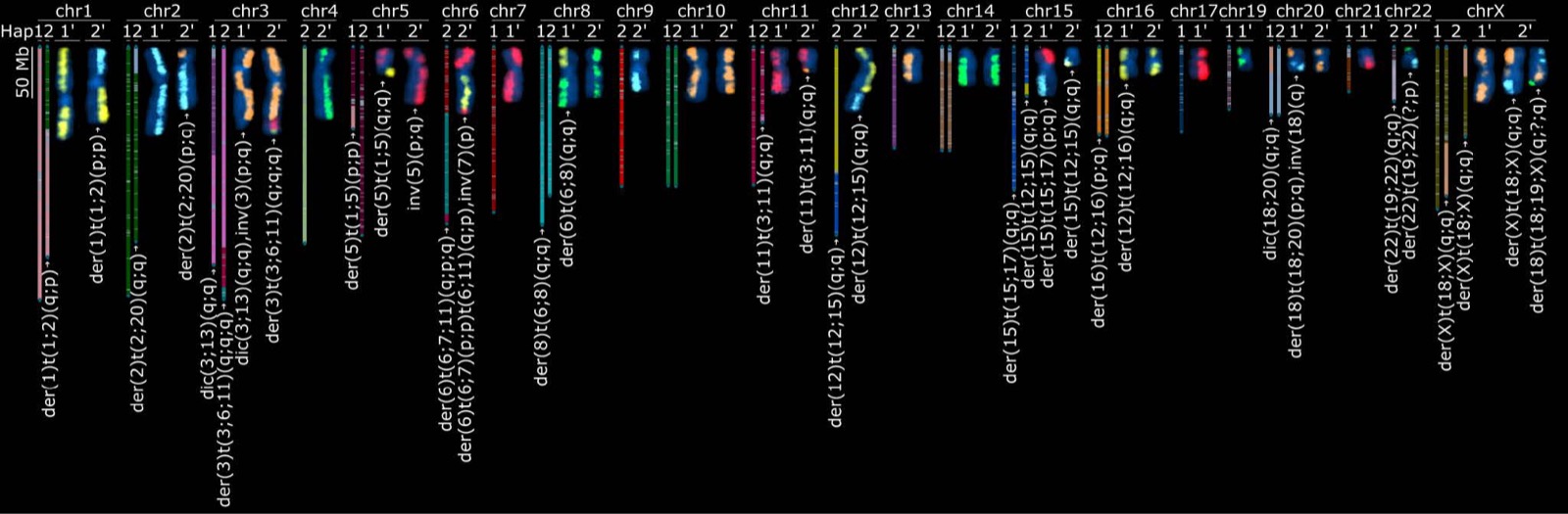
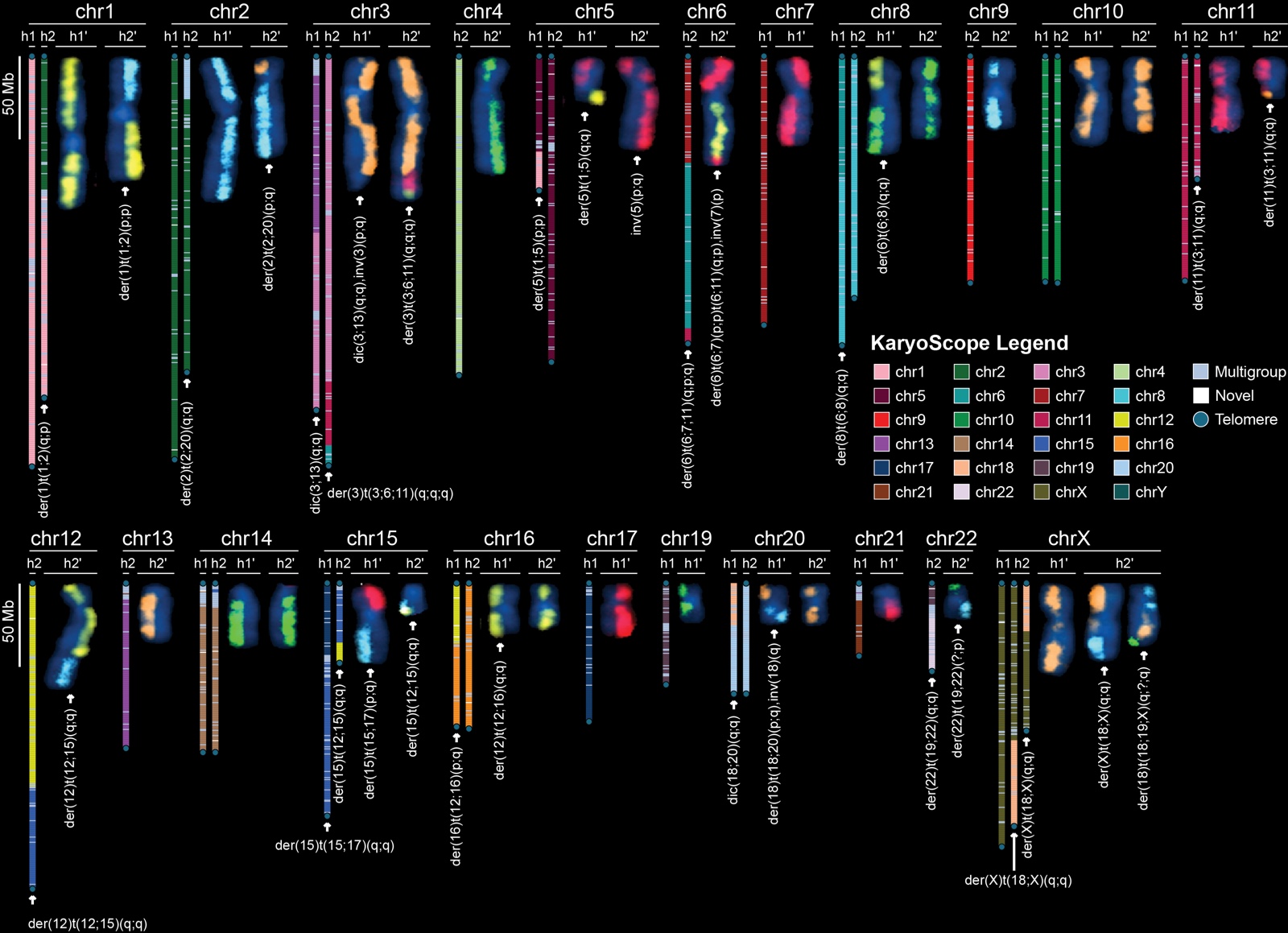
Our lab contributed via KaryoScope, our k-mer-based sequence annotation tool. It produced an ISCN-annotated karyotype of the tumor assembly that was concordant with KromaTiD dGH SCREEN cytogenetics across all 35 tumor chromosomes.
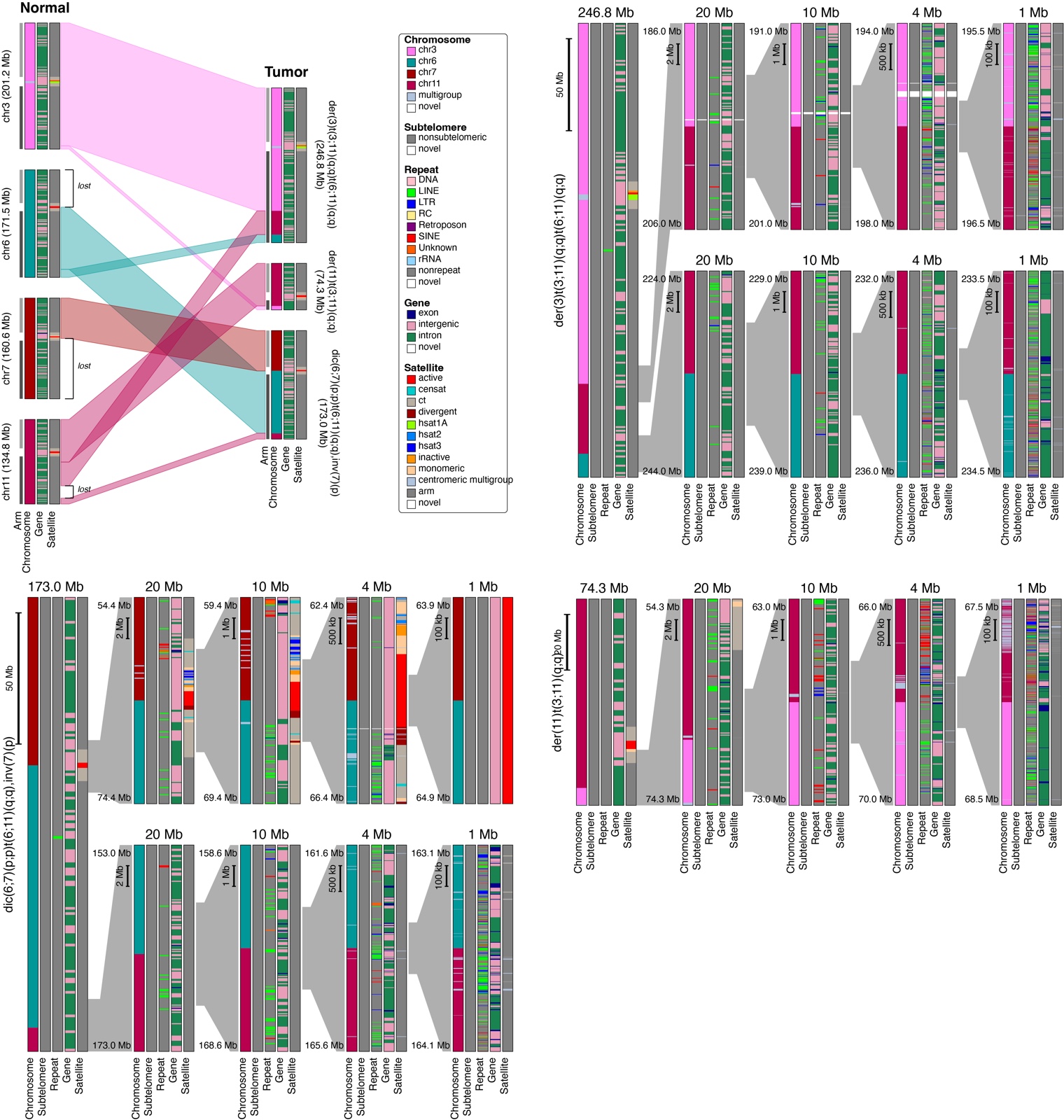
KaryoScope resolved a striking chromoplexy event linking chromosomes 3, 6, 7 and 11 into three hybrid tumor chromosomes, and pinpointed the chr6↔chr7 breakpoint deep inside the α-satellite array of both centromeres.
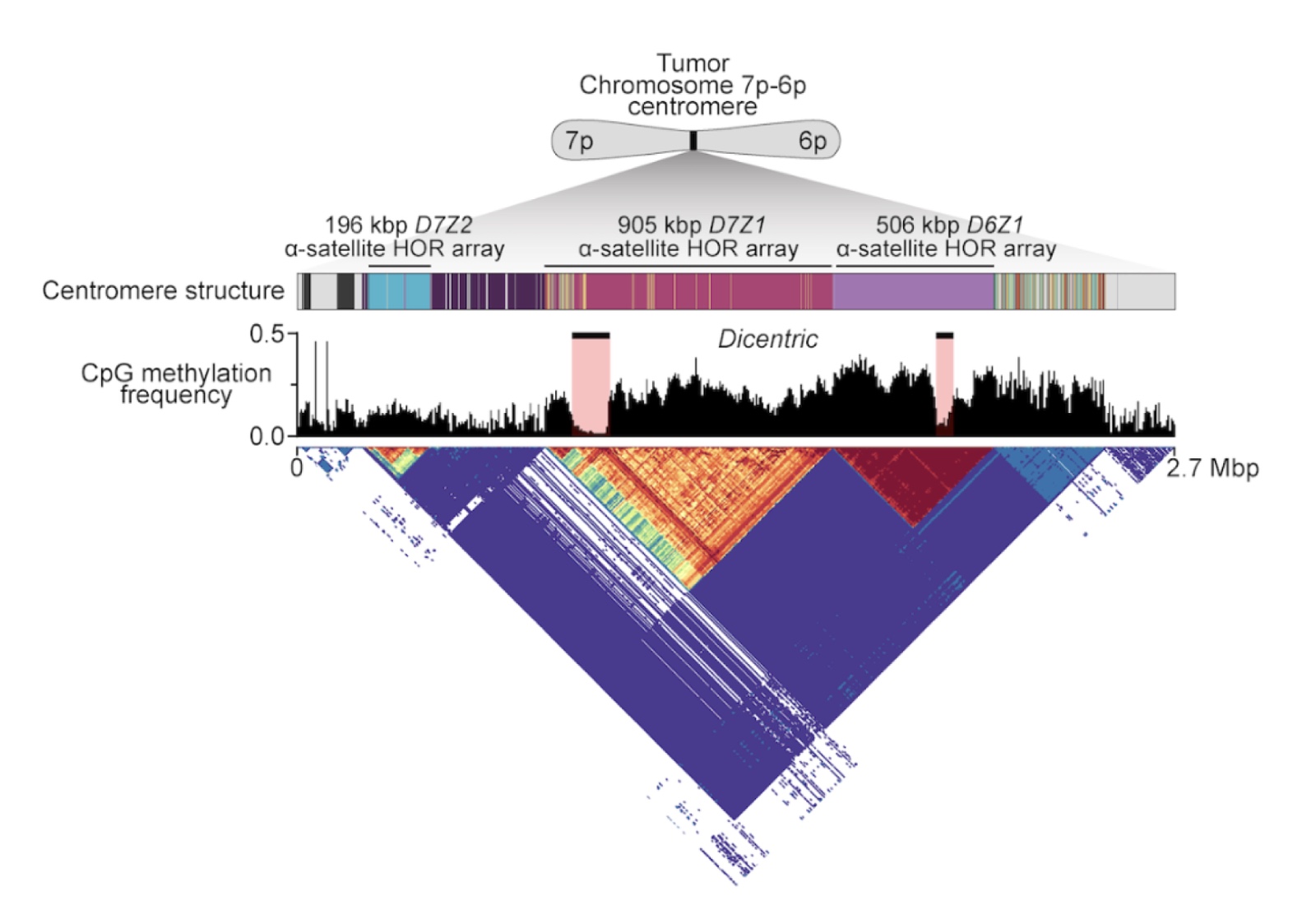
That α-satellite fusion produced what turned out to be a putative functional dicentric chromosome: two CDRs ~1 Mbp apart on D7Z1 and D6Z1, beautifully characterized by CenMAP from the Glennis Logsdon lab.
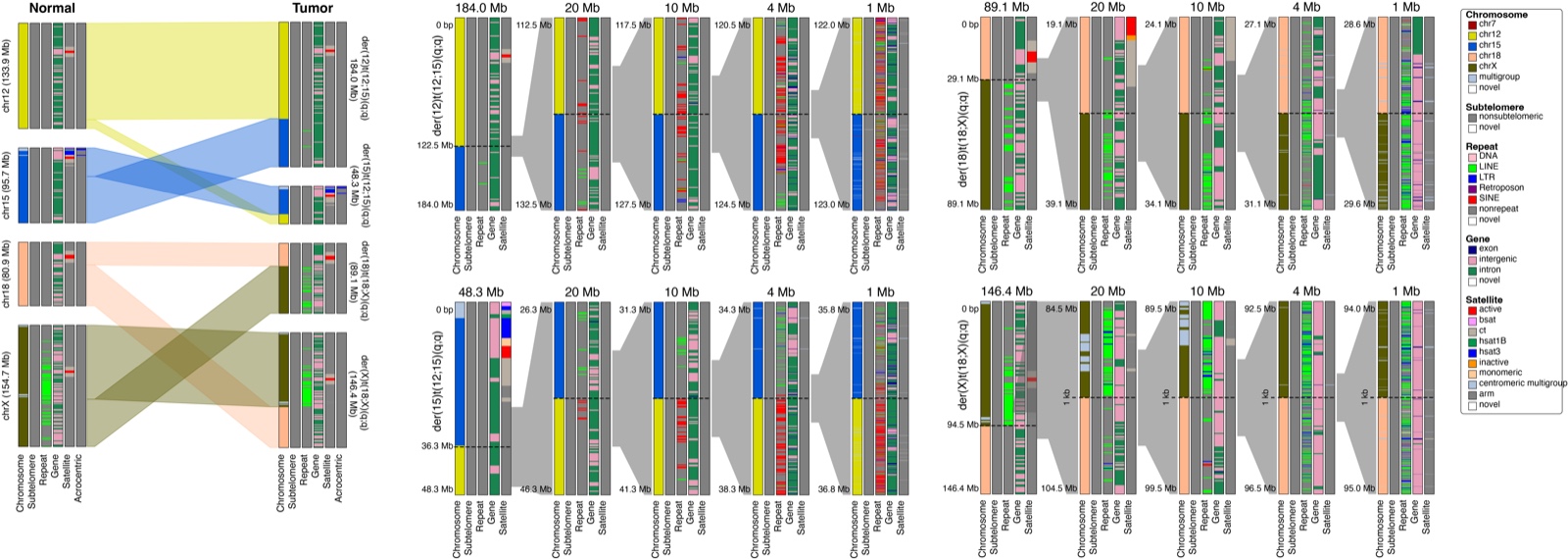
KaryoScope also resolved two reciprocal translocations (chr12↔15, chr18↔X), foldback inversions, acrocentric short-arm rearrangements, and complex multi-chromosomal events; all reconciled against dGH ground truth. Check out the preprint for a complete overview of everything we observed.
Huge congrats to Justin Zook, Mikhail Kolmogorov, Glennis Logsdon, Chunlin Xiao and the full team, and to Rhyker for driving KaryoScope. A milestone resource for somatic variant benchmarking in repetitive regions of cancer genomes.
Read more: the paper · the preprint on bioRxiv · our NAR paper that first featured KaryoScope