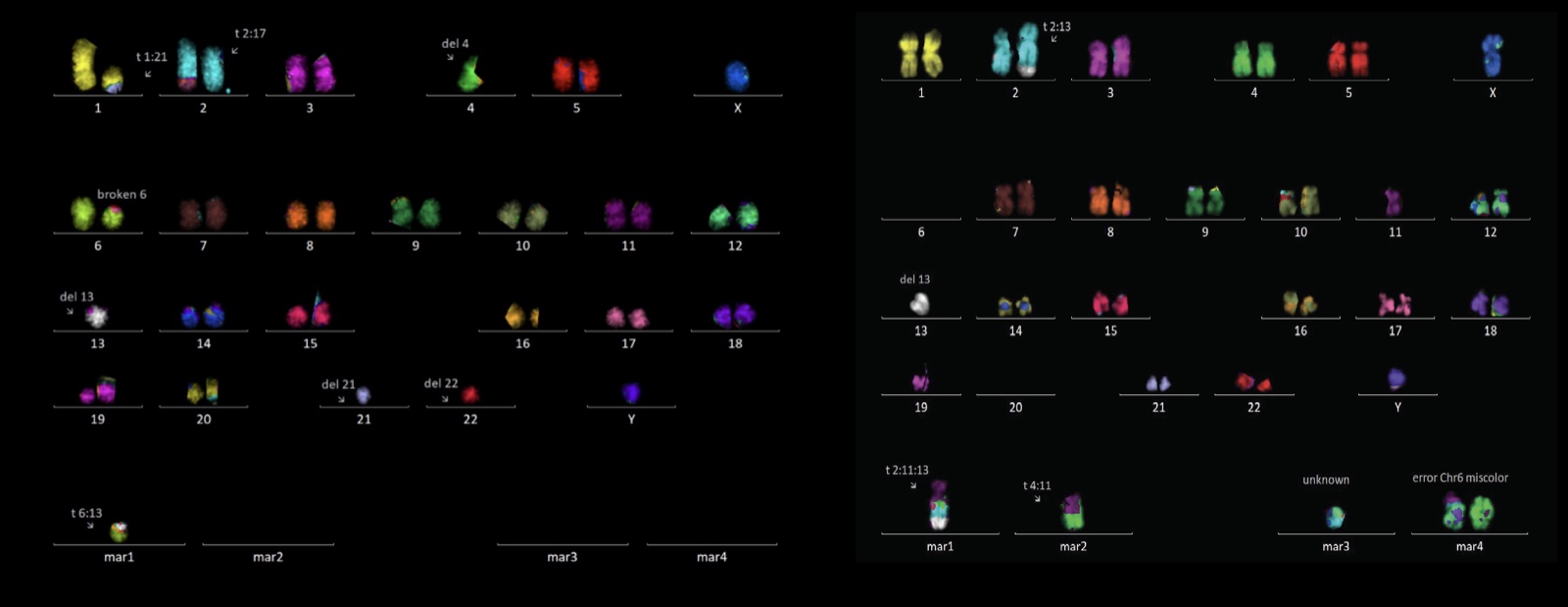
Telomere crisis is an engine of genomic instability, driving the structural evolution of cancer genomes. Our new preprint finds this damage isn’t random: it converges on the nucleolus and the chromosomes that build it.
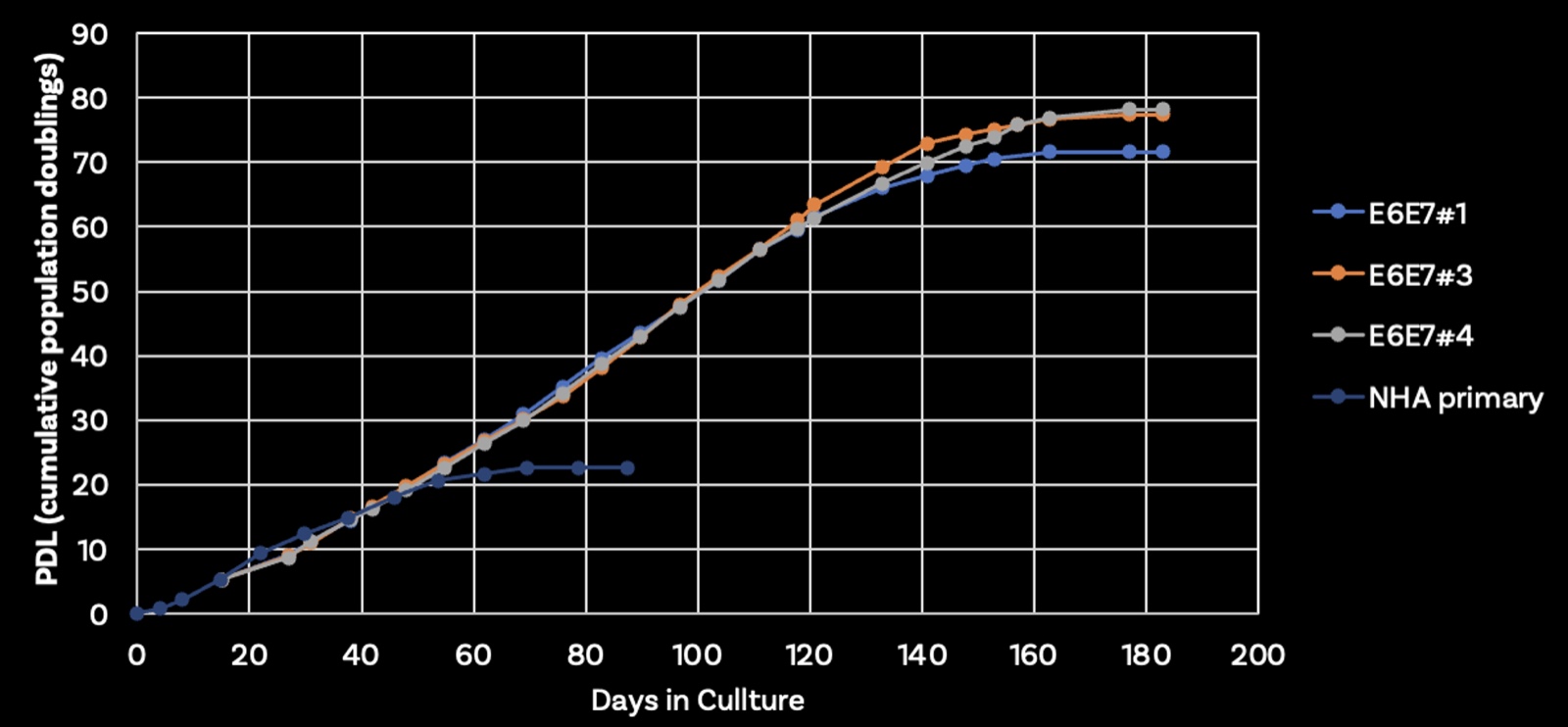
To capture it, we grew normal human astrocytes with HPV E6/E7 (inactivating p53 and Rb) but no telomerase, so cells divide through progressive telomere erosion. We tracked them longitudinally from senescence bypass through crisis, an otherwise inaccessible window.
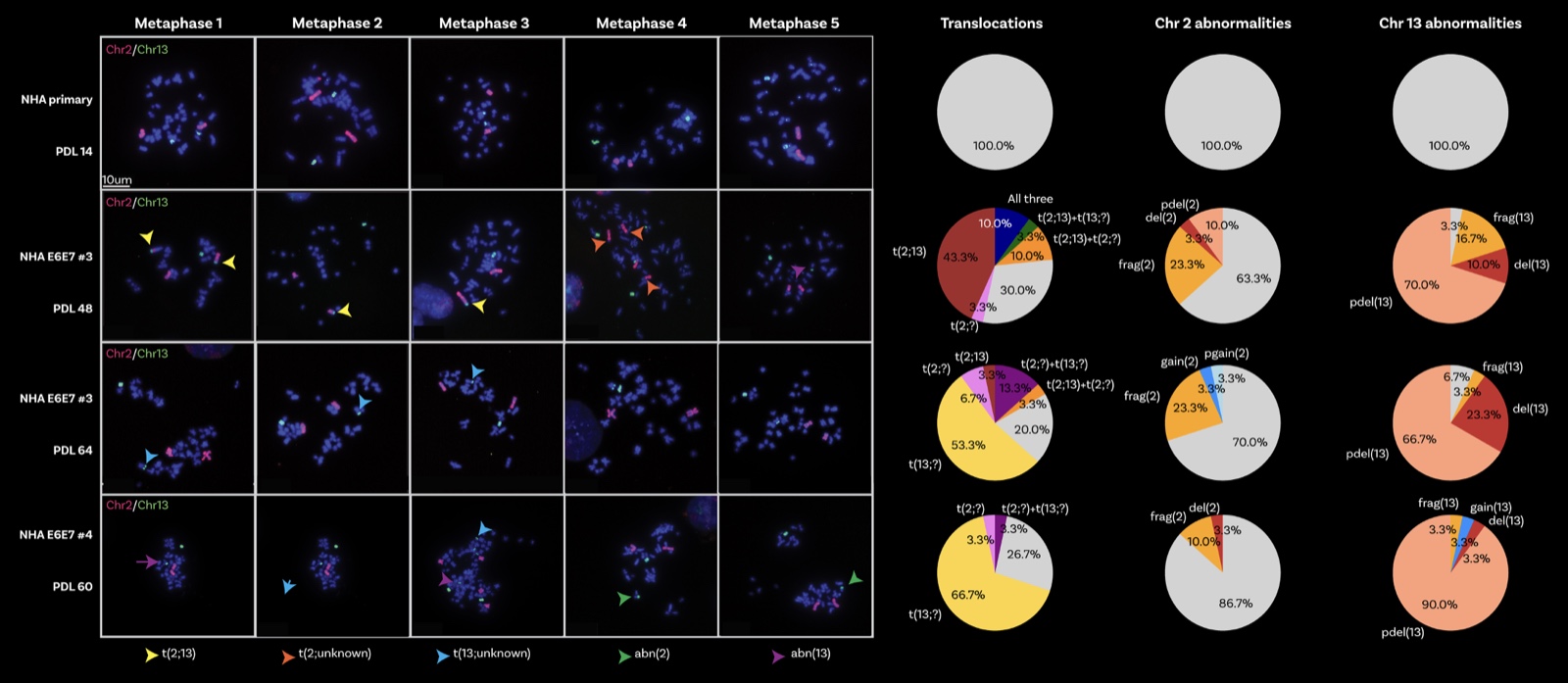
Multicolor FISH revealed subclonal abnormalities largely invisible to short-read sequencing. The bias was striking: acrocentric chromosomes carried 41% of all abnormalities despite being 15% of the autosomal genome. Chr13 was abnormal in >92% of metaphases.
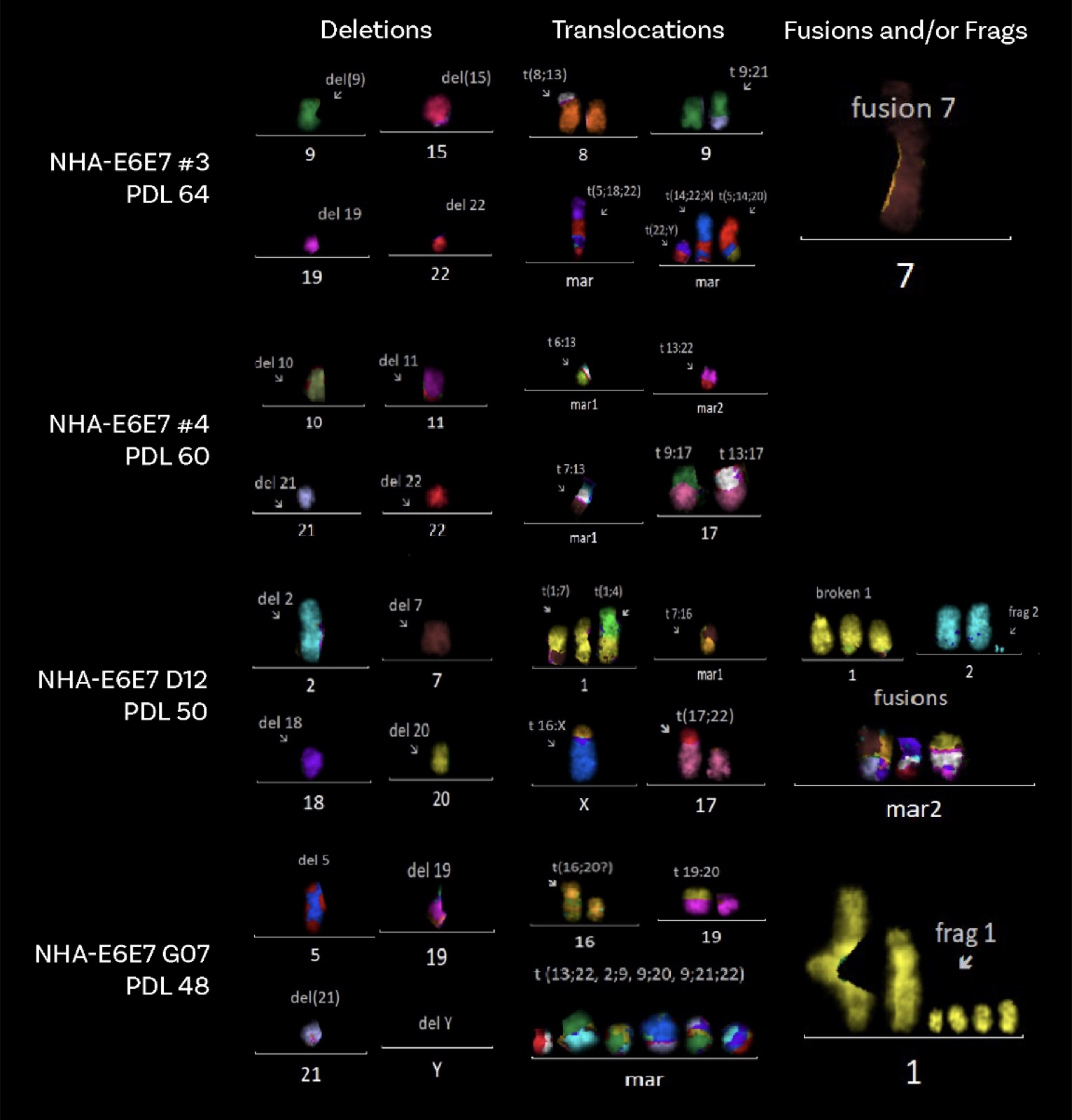
The rearrangements were strikingly dynamic. Chromosome 13 translocations were common early but transient, replaced by new partners at later passages, while whole-chromosome losses persisted. Crisis generates a shifting, subclonal landscape of damage.
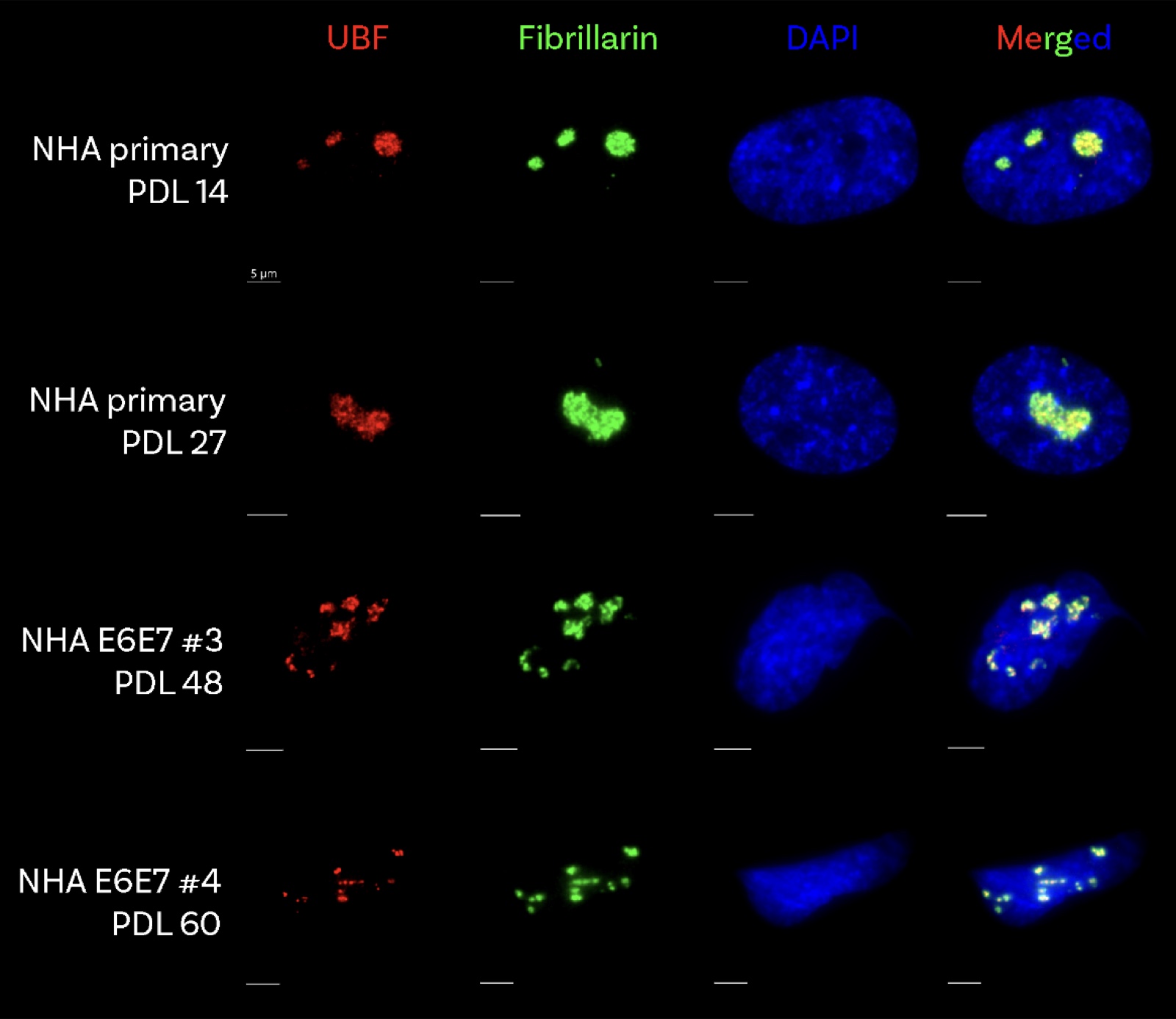
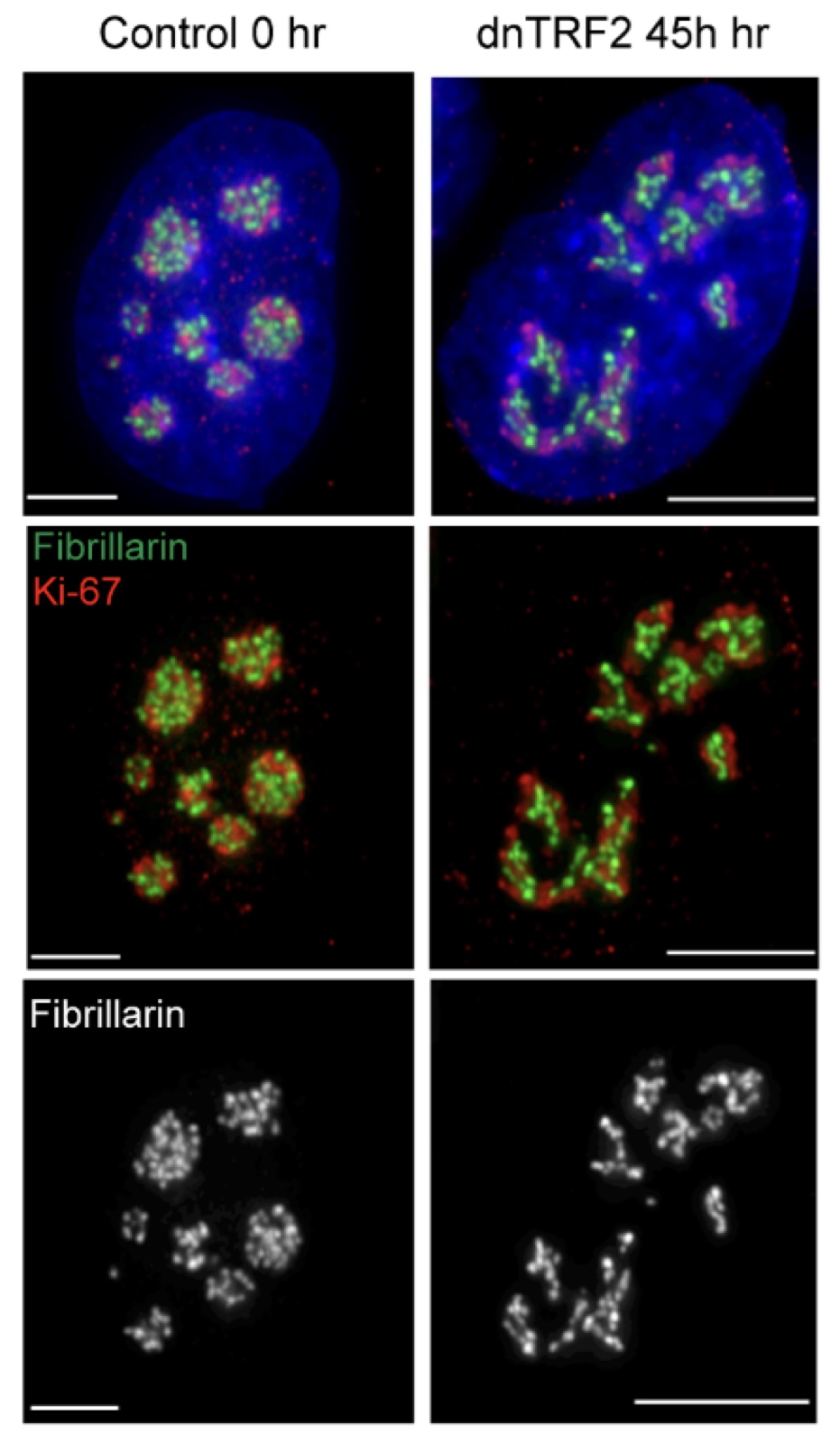
Why acrocentrics? Their short arms carry the NORs that nucleate the nucleolus. In crisis cells, nucleoli broke down: compact spheres gave way to dispersed, necklace-like structures, with rDNA transcription and processing decoupled.
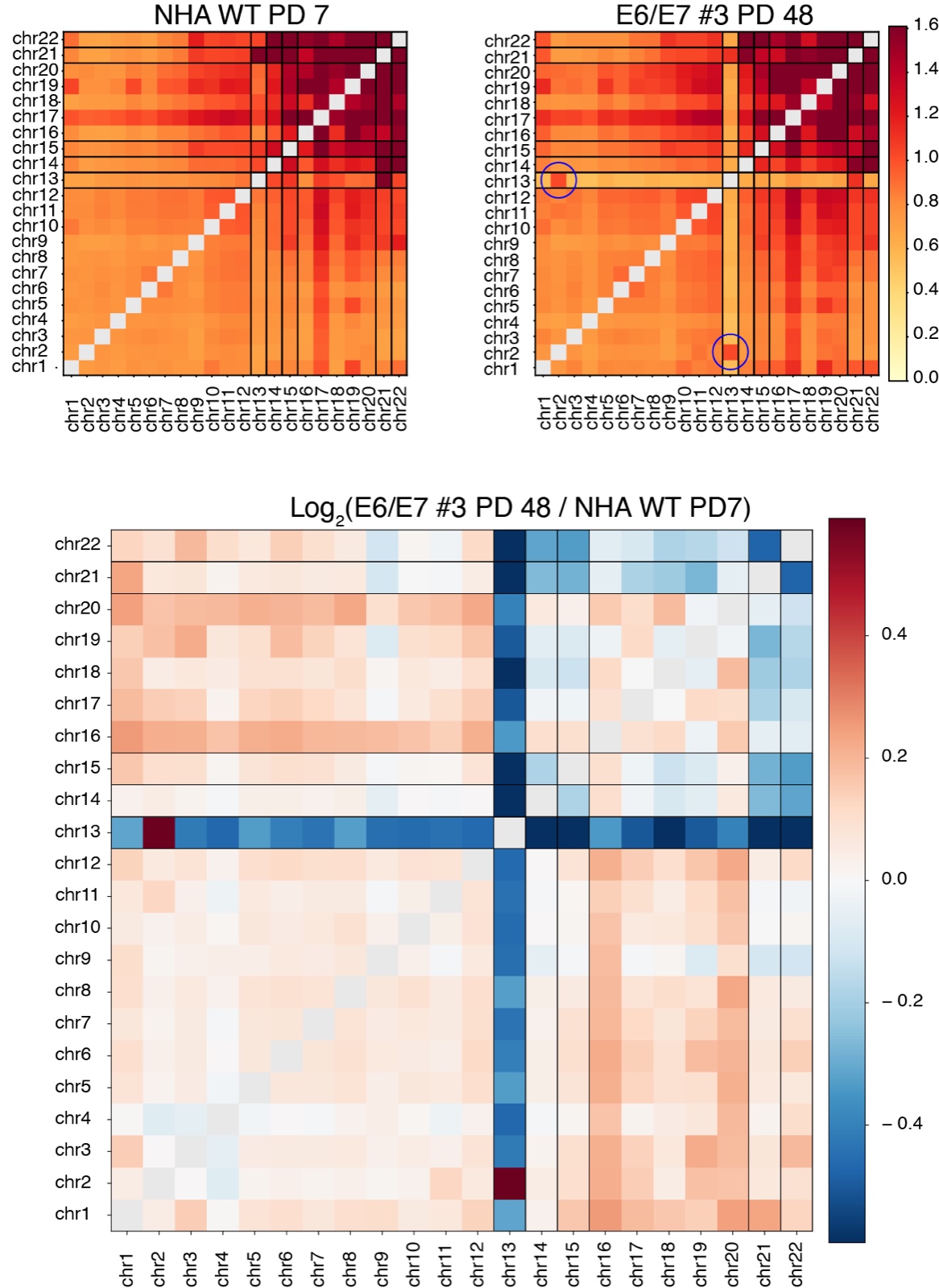
To probe nuclear organization, we used Hi-C. Standard pipelines discard the rare inter-chromosomal contacts at acrocentric arms, so we recovered them with KaryoScope, our alignment-free tool. These contacts were persistently depleted in crisis cells.
We expected broad genomic instability. Instead, telomere crisis zeroed in on the acrocentrics, consistent with findings from Beth Sullivan’s lab over a decade ago using dominant-negative TRF2 (2010, 2014).
Together: telomere dysfunction preferentially destabilizes acrocentric chromosomes and disrupts the nucleolus they collectively build. The nucleolus emerges as a structural nexus linking telomere crisis to large-scale genome rearrangement.
Huge credit to co-first authors Mimi Mbegbu and Yi-An Chen, and to collaborators Pippa Cosper and Tianpeng Zhang.
Read more: the paper · the preprint on bioRxiv